Full Attic Moisture Scan
We inspect the entire attic, not just the area above the stain. Moisture meters and FLIR infrared cameras map wet sheathing, saturated insulation, and active drip points across the whole roof deck.
Roof Leak Detection in Chula Vista starts with a real diagnosis, not a guess. We use thermal imaging cameras and moisture meters to trace where water is actually entering your home, then tell you what it will take to stop it. If you have a brown ceiling ring, a wet attic rafter, or a drip that only shows up after rain, call us. Our roof leak detection service Chula Vista homeowners rely on covers ZIP codes 91911, 91910, 91913 and the rest of the city.
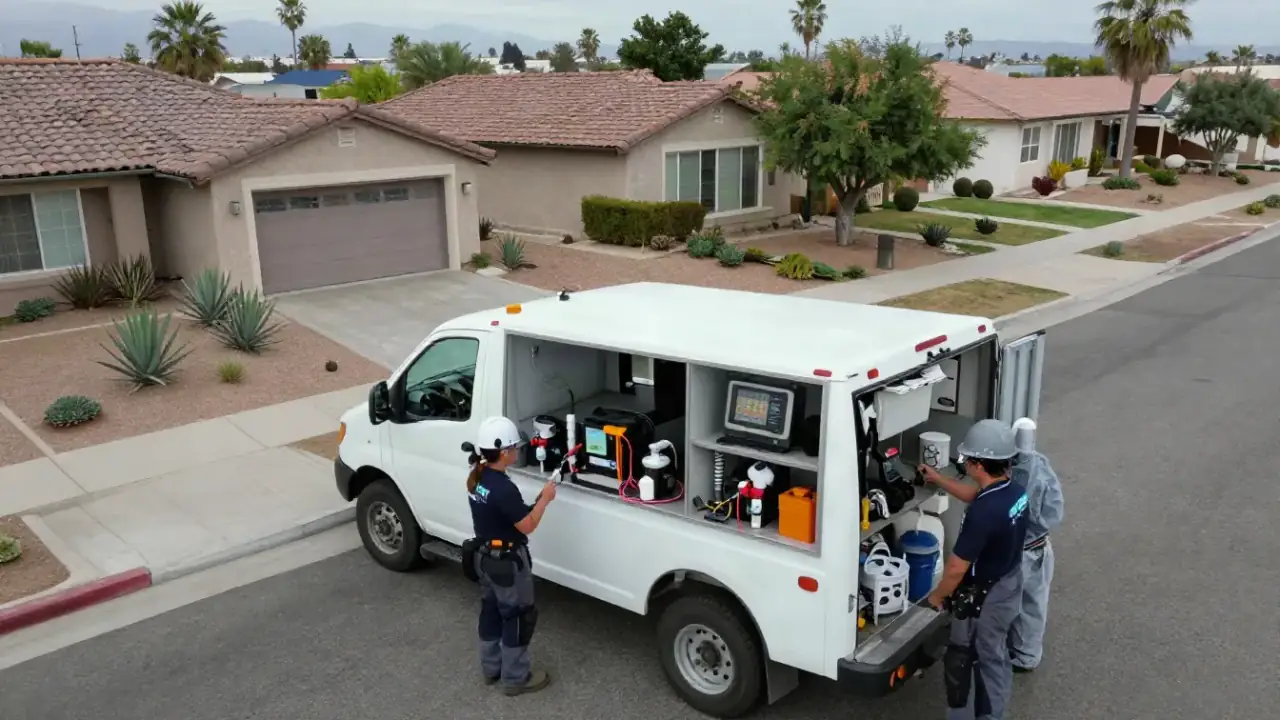
Roof Leak Detection in Chula Vista is a diagnostic service that traces water intrusion from the roof deck down through your attic, insulation, and drywall to the exact point of entry. Water rarely drips straight down. It runs along rafters, follows sheathing seams, and pools feet away from the actual breach. We map the whole path before we touch anything, using infrared cameras, moisture meters, and pressure testing gauges to confirm the source instead of chasing the stain.
Chula Vista homes deal with a specific mix of conditions: intense summer UV that dries and cracks flashing, winter rain that drives sideways under lifted shingles, and marine air that corrodes fasteners near the bay. Roofs in Eastlake and Otay Ranch often fail at pipe boots and valley seams first. If you have been searching for roof leak detection near me after a storm, we handle those calls daily across San Diego County. One call gets you a real answer.
Every inspection includes the full diagnostic package below. Repairs, roof replacement, and drywall work are quoted separately once we confirm the source, so you always know what you are paying for and why.
We inspect the entire attic, not just the area above the stain. Moisture meters and FLIR infrared cameras map wet sheathing, saturated insulation, and active drip points across the whole roof deck.
Pipe boots, flashing, valley seams, ridge caps, and shingle laps all get photographed and tested. We mark the confirmed entry point with chalk so your roofer knows exactly where to work.
We pressure test supply lines and check HVAC condensate drains and sewer vents. If the roof is not the source, you find out the same day instead of after a wasted repair.
You receive dated photos of every suspect area plus the moisture meter readings in a written summary. This is the document your insurance adjuster and roofer both want to see.
If you want us to handle the fix, we quote pipe boot replacement, flashing reseal, shingle repair, or roof leak detection and repair Chula Vista CA work on the spot. No second visit, no second diagnostic fee.
We ask when the leak shows up, where the stain is, and whether it happens during rain or every day. That single question separates a roof breach from a plumbing or HVAC condensate problem. Takes about five minutes and saves you money on the wrong service.
We start inside with moisture meters and a Fluke thermal imaging camera. Wet sheathing and saturated insulation read as cold spots on infrared, which shows us the water path before we ever climb. This step usually takes 20 to 30 minutes.
On the roof we check flashing, pipe boots, valley seams, and shingle laps. We photograph every suspect area. If the roof is too steep or wet to walk safely, we use video pipe inspection cameras and extendable optics from the eaves instead.
We do not call it a leak until we prove it. Pressure testing gauges, tracer gas detectors, or a controlled water test confirm the entry point. This is the step that separates a real diagnosis from a sales pitch.
You get photos, moisture readings, and a plain-language summary the same day. We mark the entry point on the roof and tell you what repair stops it. If you want us to do the repair, we schedule it before we leave.
We ask when the leak shows up, where the stain is, and whether it happens during rain or every day. That single question separates a roof breach from a plumbing or HVAC condensate problem. Takes about five minutes and saves you money on the wrong service.
Infrared cameras reveal wet sheathing and insulation as cold spots, tracing the leak path across the attic in minutes without cutting anything open.
These microphones pick up the sound of water moving behind walls and under sheathing, which pinpoints active drips on quiet mornings.
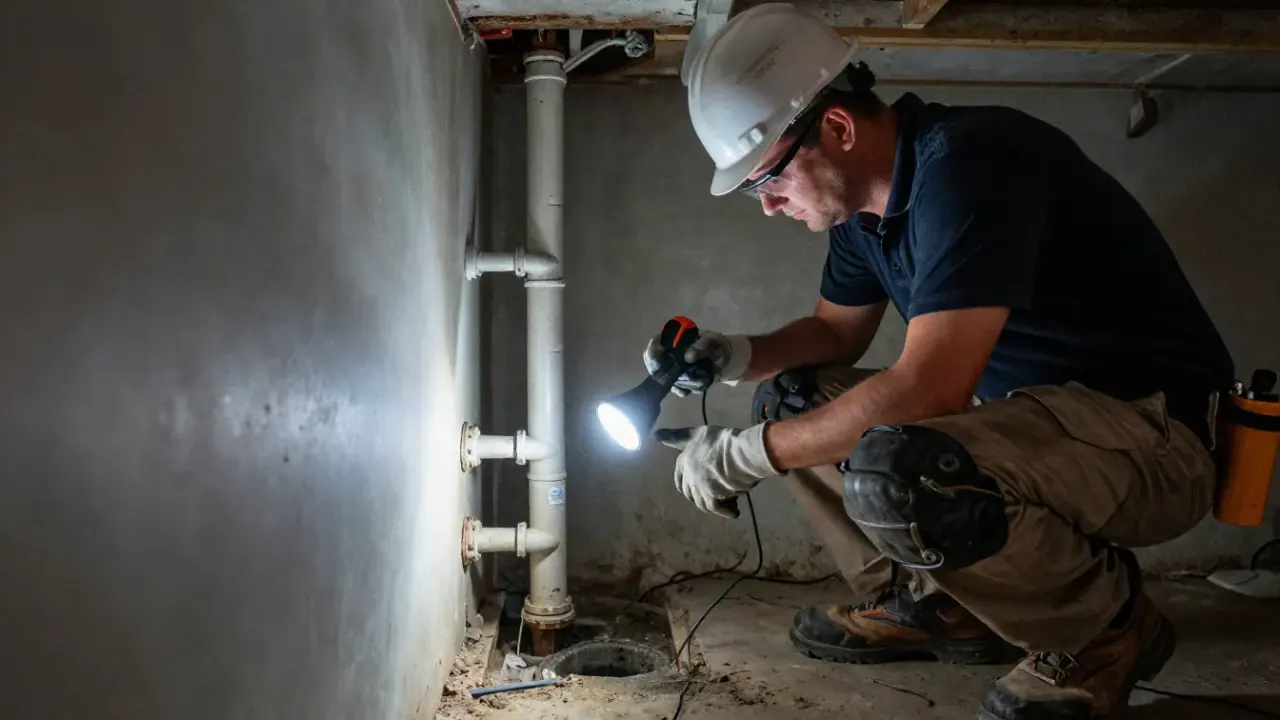
We look inside drain lines, vents, and roof cavities without demolition to rule out sewer and plumbing sources that mimic roof leaks.
Pin and pinless meters give us numeric readings on drywall, framing, and insulation so we can compare wet zones against dry reference points.
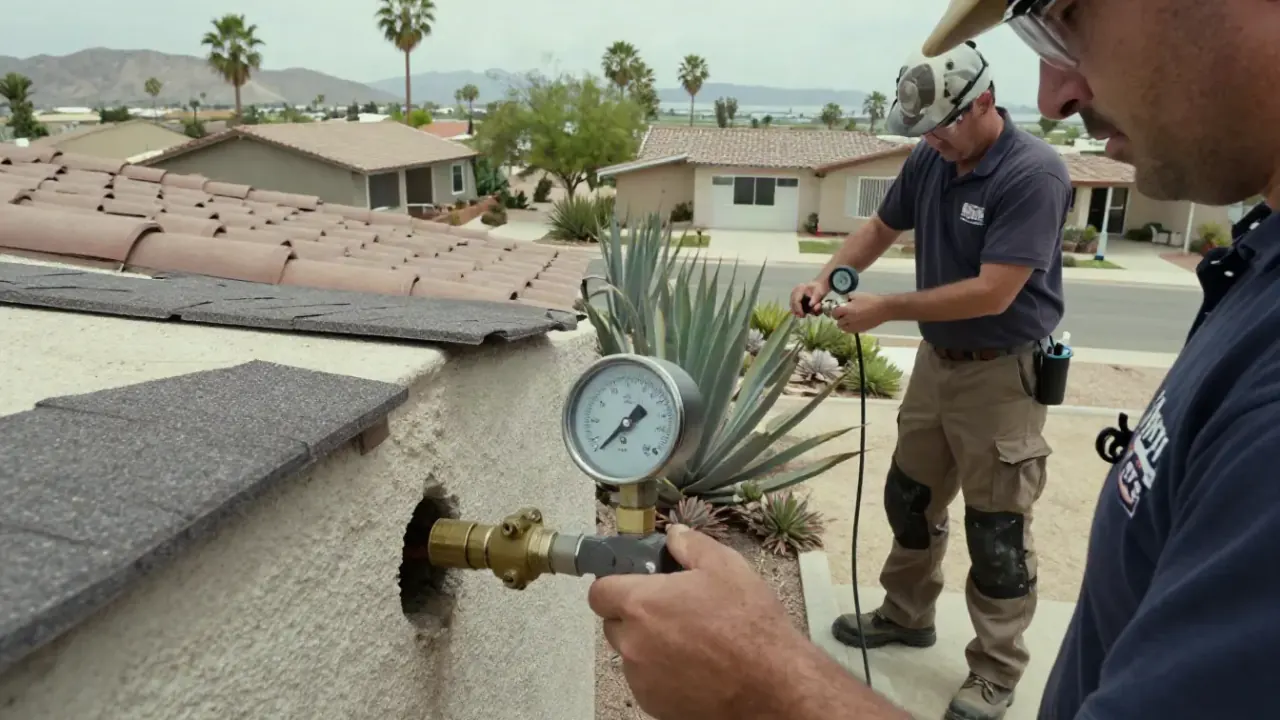
We isolate supply lines and irrigation zones to confirm whether the water is coming from the roof or from a pressurized line below.
On flat and low-slope roofs where water testing is impractical, tracer gas confirms entry points at seams, drains, and HVAC curbs.
A homeowner in Eastlake had a growing brown ring on the ceiling below the attic. Two roofing companies quoted full re-roofs between $8,000 and $11,000. The stain had been spreading for three months and insulation above the ceiling was saturated.
After: Our thermal scan found a single cracked pipe boot gasket. We replaced the boot, resealed the flashing, and dried the attic. Total repair cost was $340. The ceiling stain stopped growing within 48 hours and the insulation dried out over the following week.
Book this service →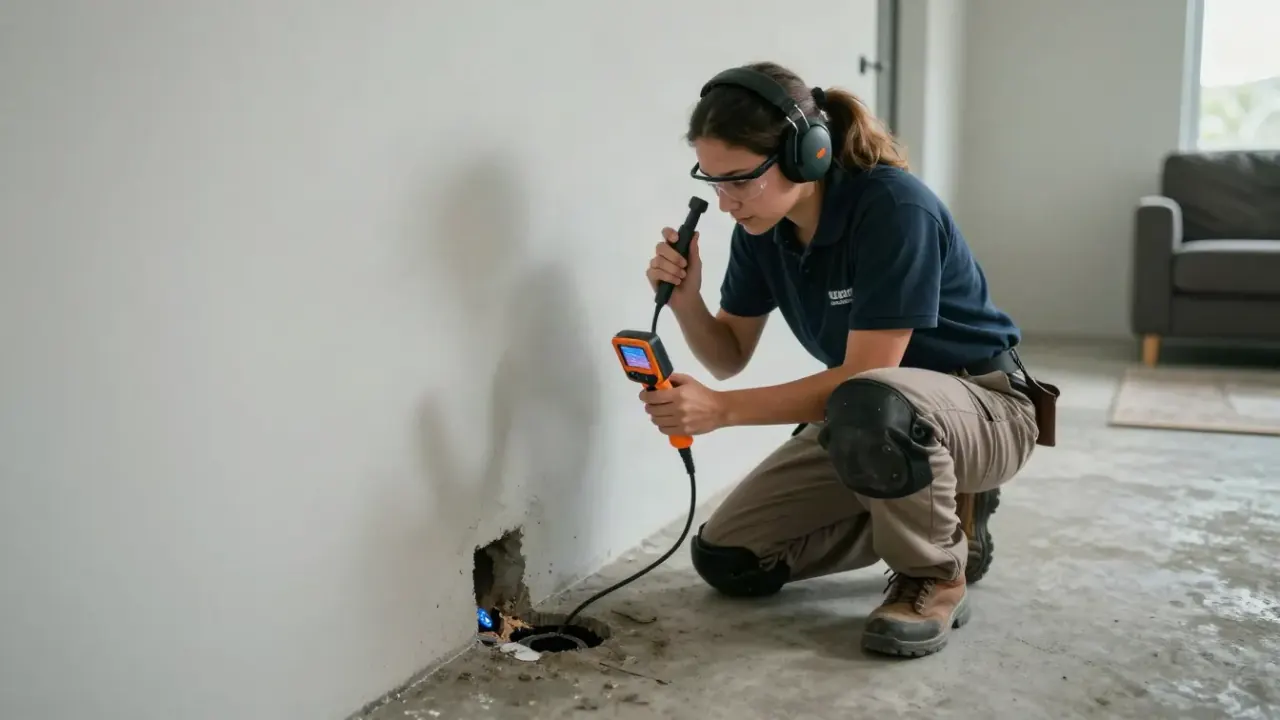
A two-story Otay Ranch home leaked only during heavy storms. The homeowner had paid $600 to a handyman who resealed the wrong area. Water was still entering the wall cavity and had started to stain the second-floor hallway ceiling.
After: Controlled water testing confirmed the entry point at a valley seam where two roof planes met. We resealed the seam with code-correct flashing and replaced two damaged shingles. The leak stopped completely, verified with a second water test and moisture readings.
Book this service →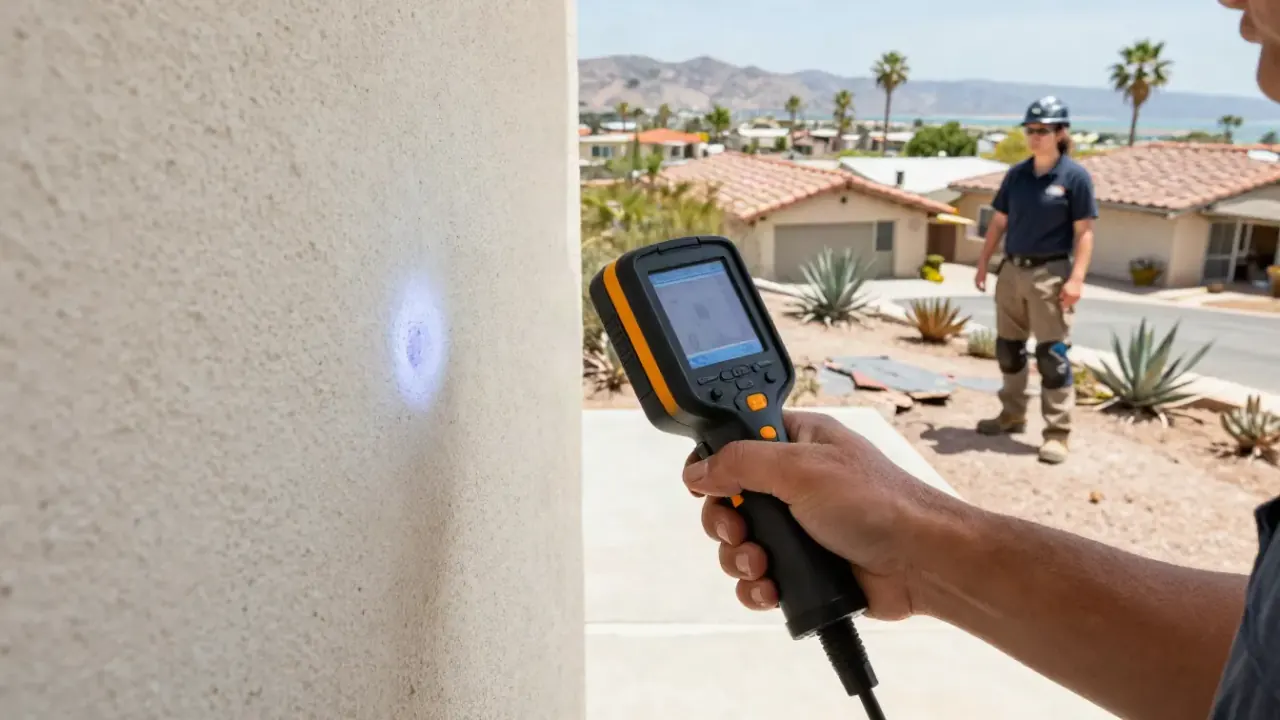
A property manager in Third Avenue Village had been treating a ceiling stain as a roof leak for six months. Two roof repairs had already been paid for. The stain kept returning every summer, which should have been the first clue.
After: We pressure tested the roof and found it dry. A moisture scan traced the water to a clogged HVAC condensate drain line in the attic. Clearing the line and replacing the drain pan solved the problem for $280, and the ceiling finally dried out.
Book this service →These are the calls we get most often. Each one has a specific cause and a specific fix, and we have seen every version of them across Chula Vista.
Ask a pro →We scan the attic with thermal imaging to trace the water path back to the entry point, then confirm it with a controlled water test. Most cases trace to a failed pipe boot or lifted step flashing, which we repair the same visit.
We test suspect areas with controlled water pressure that mimics storm conditions. Pressure testing gauges and tracer gas detectors confirm the entry point even when the roof looks fine from above.
Moisture mapping with meters and infrared cameras finds wet zones the eye cannot see. We mark the source, document the readings, and give you a repair scope before mold spreads further.
We run pressure testing on supply lines and irrigation zones first, then scan the roof. If the roof is the source, we pinpoint it with acoustic listening devices and infrared cameras and quote the repair on the spot.
Most residential inspections run $180 to $450 in 2026, depending on roof size, attic access, and how many suspect areas we need to test. Two-story homes and tile roofs sit at the higher end. The fee covers the full diagnostic, thermal scan, and written report. If we also perform the repair, we credit part of the inspection toward the work.
The best service proves the leak with instruments instead of pointing at the first wet spot. Ask any company whether they use thermal imaging cameras and moisture meters, and whether they provide photos of the entry point. We do both on every job, and we will show you the readings before you pay a dime.
Nine times out of ten it is a failed pipe boot, lifted flashing, or a valley seam where two roof planes meet. Chula Vista UV exposure dries and cracks sealant within a few years. Occasionally the source is not the roof at all but a condensate line or corroded copper pipe in the attic. Our scan tells you which one you have.
Yes. Thermal imaging cameras and moisture meters read the leak path from inside the attic and from the ceiling below, which pinpoints the entry zone before anyone goes up. We still verify from the roof when it is safe, but on steep, wet, or fragile roofs the interior scan often does the heavy lifting.
Every day you wait, water spreads further through your attic and insulation. Call (619) 943-1896 and we will schedule a same-day or next-morning inspection. Licensed, insured, and equipped with thermal imaging on every truck.
Book Inspection (619) 943-1896 →Reach us at (619) 943-1896 any time, day or night. Our emergency line is staffed 24/7, and regular appointments run Monday through Friday from 8 a.m. to 6 p.m. If you leave a message after hours, we call back within 15 minutes. We serve all of Chula Vista and the surrounding San Diego County area.